

Research instruments serve a critical function across all types of research methods. They are the primary means by which researchers collect reliable data that will later be analyzed. As noted by scholars in the field, these instruments are essential for maintaining the integrity and credibility of research findings.
The choice and design of your research instrument directly impact the quality of data you collect. Poor instrument design can lead to biased results, misunderstood questions, low response rates, or data that doesn’t actually address your research questions. Conversely, a well-designed instrument facilitates smooth data collection and produces information that genuinely advances understanding in your field.
Real-World Application: A Social Media Research Example
To illustrate how research instruments work in practice, consider a recent field experiment examining toxic content on social media platforms. Researchers studied 742 users over six weeks across Facebook, X (formerly Twitter), and YouTube to understand how toxic content affects user engagement.
The research revealed a paradox: less toxic content actually led to lower engagement rates. Users switched to other platforms when exposed to less toxic content, and overall, posts became less toxic during the study period. This finding highlights an important conflict that platforms face between maximizing profits through engagement and promoting user wellbeing.
This study demonstrates several key principles of good instrument design. The researchers needed instruments that could accurately measure “toxicity” in content, track user engagement across multiple metrics, and account for variables like platform differences and time spent on site. Their instrument design had to operationalize abstract concepts (like “toxic content”) into measurable variables while maintaining validity across different social media environments.
Practical Considerations for Instrument Development When developing your own research instrument, keep these practical considerations in mind:
Start with existing instruments – Don’t reinvent the wheel. Many validated instruments already exist for common research topics. You can adapt these to your context, which saves time and leverages established validity and reliability.
Pilot test thoroughly – Before deploying your instrument widely, test it with a small sample. This helps identify confusing questions, technical problems, or unexpected response patterns.
Consider your sample – Design your instrument with your target population in mind. Reading level, cultural references, question length, and format should all be appropriate for your respondents.
Plan for analysis – Think ahead to how you’ll analyze your data. The structure of your questions should facilitate the analytical techniques you plan to use.
Balance comprehensiveness with brevity – While you want to gather sufficient data, overly long instruments lead to respondent fatigue and lower quality responses.
Ensure ethical compliance – Your instrument should respect respondent privacy, obtain proper consent, and avoid questions that could cause psychological harm.
Research instruments are far more than simple data collection tools—they’re carefully designed mechanisms that transform abstract research questions into concrete, analyzable information.
Whether you’re developing a questionnaire to assess student satisfaction, a test to measure learning outcomes, or an observational checklist for behavioral research, the principles remain the same: your instrument must be valid, reliable, theoretically grounded, and appropriate for your research context.
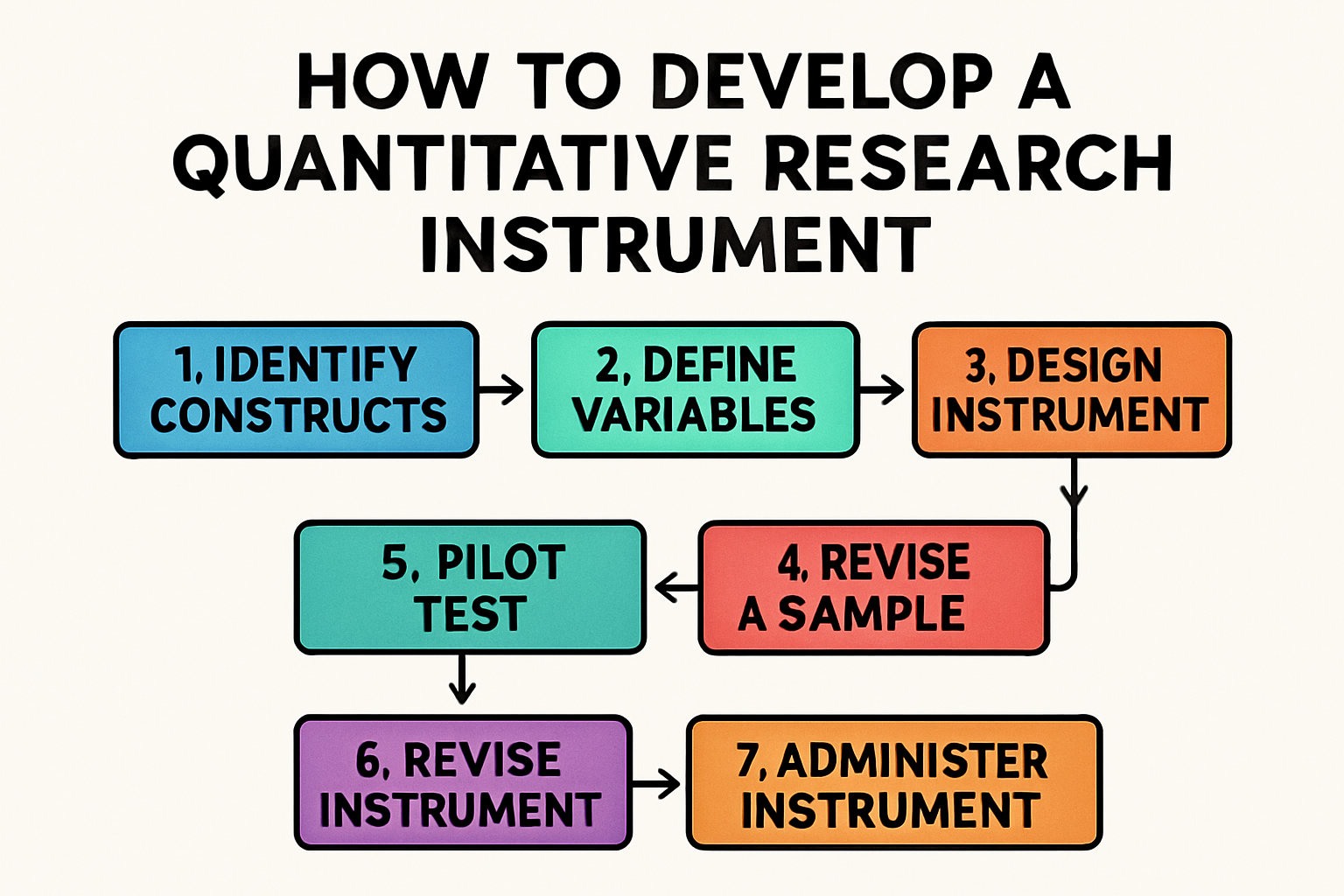
The eight-step development process provides a roadmap, but remember that instrument development is often iterative. You may need to cycle back through earlier steps as you refine your understanding of the topic and clarify your research questions. The effort invested in developing a strong research instrument pays dividends throughout your study, from smoother data collection to more credible findings.