• Concepts and Variables

    Concepts and variables are two key terms that play a significant role in media studies. While the two terms may appear similar, they serve distinct purposes and meanings. Understanding the differences between concepts and variables is essential for media studies scholars and students. In this blog post, we will explore the distinctions between concepts and variables in the context of media studies. 

    Concepts: 

    Concepts are abstract ideas that help to classify and describe phenomena. They are essential in media studies as they help in creating an understanding of the objects of study. Concepts are used to develop mental models of media objects, to analyze and critique them. For example, concepts such as “representation” and “power” are used to describe and understand how media texts work (Kellner, 2015). 

    Variables: 

    Variables, on the other hand, are used to store data in a program or research. They are crucial in media studies research as they help in collecting and analyzing data. Variables are named containers that hold a specific value, such as numerical or textual data. Variables can be manipulated and changed during the research process. For example, variables such as age, gender, and socio-economic status can be used to collect data and analyze the relationship between media and society (Morgan & Shanahan, 2010). 

    Differences: 

    One of the significant differences between concepts and variables is that concepts are abstract while variables are concrete. Concepts are used to create mental models that help to understand and analyze media objects, while variables are used to collect and analyze data in research. Another difference is that concepts are broader and at a higher level than variables. Concepts are used to describe the overall structure and design of media texts, while variables are used to study specific aspects of media objects. 

    In addition, concepts are often used to group together related variables in media studies research. For example, the concept of “media effects” might be used to group variables such as exposure to media, attitude change, and behavior change. By grouping related variables together, researchers can have a better understanding of the complex relationships between variables and concepts in media studies research. 

    Concepts and Variables are two essential components of media studies research. Concepts help to develop mental models of media objects, while variables are used to collect and analyze data in research. By understanding the differences between these two terms, media studies scholars and students can create more effective and efficient research.

  • Reliability

    Reliability is an essential aspect of research, especially in the field of media studies. It refers to the consistency and dependability of research findings, which should be replicable over time and across different contexts. In other words, a reliable study should yield the same results when conducted by different researchers or at different times. Achieving reliability in research requires careful planning, methodology, and data analysis. This essay explains how media students can ensure reliability in their research and provides examples of reliable studies in the field.

    To achieve reliability in research, media students need to adhere to rigorous and consistent research methods. This means that they should design their studies with clear research questions, objectives, and hypotheses, and use appropriate research designs and sampling methods to minimize bias and errors. For instance, if a media student is investigating the impact of social media on political polarization, they should use a randomized controlled trial or a longitudinal study with a representative sample to ensure that their findings are not skewed by selection bias or confounding variables.

    Moreover, media students should use reliable and valid measurement tools to collect data, such as surveys, interviews, or content analysis. These tools should be tested for their reliability and validity before being used in the actual study. For example, if a media student is measuring media literacy, they should use a standardized and validated scale such as the Media Literacy Scale (MLQ) developed by Renee Hobbs, which has been shown to have high internal consistency and test-retest reliability.

    Additionally, media students should analyze their data using reliable statistical methods and software, such as SPSS or R. They should also report their findings accurately and transparently, providing sufficient details about their methodology, data, and limitations. This allows other researchers to replicate their study and verify their findings, which enhances the reliability and credibility of their research.

    One example of a reliable study in media studies is the research conducted by Pew Research Center on social media use in the United States. Pew Research Center has been conducting surveys on social media use since 2005, using consistent and standardized questions and methods across different surveys. This has allowed them to track changes and trends in social media use over time, and their findings have been widely cited and used by policymakers, journalists, and scholars.

    Another example is the research conducted by Sonia Livingstone and Julian Sefton-Green on young people’s digital lives. They conducted a qualitative study with 28 participants from diverse backgrounds and analyzed their interviews and online activities using grounded theory. They also used member checking and peer debriefing to enhance the trustworthiness and credibility of their findings. Their study has been praised for its rich and nuanced insights into young people’s digital practices and has influenced policy and practice in education and media literacy.

    In conclusion, achieving reliability in research is crucial for media students who want to produce valid and trustworthy findings. They should plan their studies carefully, use reliable methods and measurement tools, analyze their data accurately, and report their findings transparently. By doing so, they can contribute to the advancement of knowledge in media studies and inform policy and practice in the field.

  • Developing a thesis and supporting arguments

    ANOVA Bi-variate Broadcast Central Tendency Chi Square test Concepts Correlation cross sectional dependent t-test Dispersion Distributions Example Literature Review Marketing Mean Media Median Media Research Mode Models Podcast Qualitative Quantitative Reliable Replicability Reporting Research Areas Research Design Research General Research Methods Sampling Scales SPSS Standard Deviation Statistics Streaming Study design t-test Television Testing Thematic Analysis Theory Topics Variables Video

    There’s something you should know: Your college instructors have a hidden agenda. You may be alarmed to hear this-yet your achievement of their “other” purpose may very well be the most important part of your education. For every writing assignment has, at the least, these two other purposes:

    • To teach you to state your case and prove it in a clear, appropriate, and lively manner
    • To teach you to structure your thinking.

    Consequently, all expository writing, in which you formulate a thesis and attempt to prove it, is an opportunity to practice rigorous.

    This TIP Sheet is designed to assist media students in the early stages of writing any kind of non-fiction or to start a research report/proposal piece. It outlines the following steps:

    1. Choosing a Subject

    Suppose your instructor asks you to write an essay about the role of social media in society.

    Within this general subject area, you choose a subject that holds your interest and about which you can readily get information: the impact of social media on mental health.

    1. Limiting Your Subject

    What will you name your topic? Clearly, “social media” is too broad; social media encompasses various platforms, uses, and audiences, and this could very well fill a book and require extensive research. Simply calling your subject “mental health” would be misleading. You decide to limit the subject to “the effects of social media on mental health.” After some thought, you decide that a better, more specific subject might be “the relationship between social media use and depression among college students.” (Be aware that this is not the title of your essay. You will title it much later.) You have now limited your subject and are ready to craft a thesis.

    1. Crafting a thesis statement

    While your subject may be a noun phrase such as the one above, your thesis must be a complete sentence that declares where you stand on the subject. A thesis statement should almost always be in the form of a declarative sentence. Suppose you believe that social media use is linked to depression among college students; your thesis statement may be, “Excessive use of social media among college students is associated with higher levels of depression and anxiety.” Or, conversely, perhaps you think that social media use has a positive effect on mental health among college students. Your thesis might be, “Regular use of social media among college students can have a positive impact on their mental health, as it allows them to connect with peers and access mental health resources.”

    1. Identifying supporting arguments

    Now you must gather material, or find arguments to support your thesis statement. Use these questions to guide your brainstorming, and write down all ideas that come to mind:

    Definition: What is social media? What is depression? How are they related? Comparison/Similarity: How does social media use by college students compare to use by other age groups? How does the rate of depression among college students compare to that of other age groups? How do the effects of social media use on mental health compare among different social media platforms? Comparison/Dissimilarity: How does social media use among college students differ from use by other age groups? How does the rate of depression among college students differ from that of other age groups? How do the effects of social media use on mental health differ among different social media platforms? Comparison/Degree: To what degree is social media use linked to depression among college students? To what degree do different social media platforms impact mental health differently? Relationship (cause and effect): What causes depression among college students? What are the effects of excessive social media use on mental health? How does social media use affect socialization among college students? Circumstance: What are the circumstances that lead college students to excessive social media use? What are the implications of limiting social media use among college students? How can college students use social media in a healthy way? Testimony: What are the opinions of mental health professionals about the effects of social media use on mental health? What are the opinions of college students who have experienced depression? What are the opinions of college students who use social media frequently and those who use it minimally? The Good: Would limiting social media use among college students be beneficial for their mental health? Would increased social media use lead to better mental health outcomes? What is fair to college students and their access to social media? 

    1. Revising Your Thesis

    After you have gathered your supporting arguments, it’s time to revise your thesis statement. As you revise your thesis, ask yourself the following questionsHave I taken a clear position on the subject? Is my thesis statement specific enough? Does my thesis statement adequately capture the direction of my paper? Does my thesis statement make sense? Does my thesis statement need further revision?

    1. Writing Strong Topic Sentences

    That Support the Thesis Once you have a strong thesis statement, it’s important to make sure that each paragraph in your paper supports that thesis. The topic sentence of each paragraph should be closely related to the thesis statement and should provide a clear indication of the paragraph’s content. By carefully crafting your topic sentences, you can ensure that your paper is cohesive and focused. This TIP Sheet has provided an overview of the steps involved in crafting a strong thesis statement and supporting arguments for non-fiction writing. As a media student, you can apply these steps to any number of topics related to media studies, such as the impact of social media on political discourse, the representation of women in film, or the ethics of digital media manipulation. By carefully selecting a subject, limiting that subject, crafting a clear thesis statement, identifying supporting arguments, revising that thesis, and writing strong topic sentences that support your thesis, you can ensure that your writing is both focused and persuasive

  • First Step

    ANOVA Bi-variate Broadcast Central Tendency Chi Square test Concepts Correlation cross sectional dependent t-test Dispersion Distributions Example Literature Review Marketing Mean Media Median Media Research Mode Models Podcast Qualitative Quantitative Reliable Replicability Reporting Research Areas Research Design Research General Research Methods Sampling Scales SPSS Standard Deviation Statistics Streaming Study design t-test Television Testing Thematic Analysis Theory Topics Variables Video

    As a student, you may be required to conduct research for a project, paper, or presentation. Research is a vital skill that can help you understand a topic more deeply, develop critical thinking skills, and support your arguments with evidence. Here are some basics of research that every student should know.

    What is research?

    Research is the systematic investigation of a topic to establish facts, draw conclusions, or expand knowledge. It involves collecting and analyzing information from a variety of sources to gain a deeper understanding of a subject.

    Types of research

    There are several types of research methods that you can use. Here are the three most common types:

    1. Quantitative research involves collecting numerical data and analyzing it using statistical methods. This type of research is often used to test hypotheses or measure the effects of specific interventions or treatments.

    2. Qualitative research involves collecting non-numerical data, such as observations, interviews, or open-ended survey responses. This type of research is often used to explore complex social or psychological phenomena and to gain an in-depth understanding of a topic.

    3. Mixed methods research involves using both quantitative and qualitative methods to answer research questions. This type of research can provide a more comprehensive understanding of a topic by combining the strengths of both quantitative and qualitative data.

    Steps of research

    Research typically involves the following steps:

    1. Choose a topic: Select a topic that interests you and is appropriate for your assignment or project.
    2. Develop a research question: Identify a question that you want to answer through your research.
    3. Select a research method: Choose a research method that is appropriate for your research question and topic.
    4. Collect data: Collect information using the chosen research method. This may involve conducting surveys, interviews, experiments, or observations, or collecting data from secondary sources such as books, articles, government reports, or academic journals.
    5. Analyze data: Examine your research data to draw conclusions and develop your argume
    6. Present findings: Share your research and conclusions with others through a paper, presentation, or other format.

    Tips for successful research

    Here are some tips to help you conduct successful research:

    • Start early: Research can be time-consuming, so give yourself plenty of time to complete your project.
    • Use multiple sources: Draw information from a variety of sources to get a comprehensive understanding of your topic.
    • Evaluate sources: Use critical thinking skills to evaluate the accuracy, reliability, and relevance of your sources.
    • Take notes: Keep track of your sources and take notes on key information as you conduct research.
    • Organize your research: Develop an outline or organizational structure to help you keep track of your research and stay on track.
    • Use AI to brainstorm, get a broader insight in your topic, and what possible gaps of problems might be. Use it not to execute and completely write your final work
  • Theories, Models and Concepts

    Theories, Models, and Concepts in Media and Marketing

    In the realm of media and marketing, understanding theories, models, and concepts is crucial for developing effective strategies. These constructs provide a framework for analyzing consumer behavior, crafting strategies, and implementing marketing campaigns. This essay will explore each construct with examples to illustrate their application.

    Theories

    Definition: Theories in marketing and media are systematic explanations of phenomena that predict how certain variables interact. They help marketers understand consumer behavior and the effectiveness of different strategies.

    Example: Maslow’s Hierarchy of Needs

    • Theory: Maslow’s Hierarchy of Needs is a psychological theory that suggests human actions are motivated by a progression of needs, from basic physiological requirements to self-actualization[3].
    • Model: In marketing, this theory is modeled by identifying which level of need a product or service satisfies. For example, a luxury car brand might focus on self-esteem needs by promoting exclusivity and status.
    • Concept: The concept derived from this model is “status marketing,” where products are marketed as symbols of success and achievement to appeal to consumers seeking self-esteem fulfillment.

    Models

    Definition: Models are simplified representations of reality that help marketers visualize complex processes and make predictions. They often serve as tools for strategic planning.

    Example: AIDA Model

    • Theory: The AIDA model is based on the theory that consumers go through four stages before making a purchase: Attention, Interest, Desire, and Action[2].
    • Model: This model guides marketers in structuring their advertising campaigns to first capture attention with striking visuals or headlines, then build interest with engaging content, create desire by highlighting benefits, and finally prompt action with clear calls to action.
    • Concept: The concept here is “customer journey mapping,” where marketers design each stage of interaction to lead the consumer smoothly from awareness to purchase.

    Concepts

    Definition: Concepts are ideas or mental constructs that arise from theories and models. They provide actionable insights or strategies for marketers.

    Example: Content Marketing

    • Theory: Content marketing is grounded in the theory that providing valuable content builds brand awareness and trust among consumers[2].
    • Model: A content marketing model involves creating a mix of informative blogs, engaging videos, and interactive social media posts to attract and retain an audience.
    • Concept: The concept derived from this model is “brand storytelling,” where brands use narratives to connect emotionally with their audience, fostering loyalty and engagement.

    In the realm of media and marketing, understanding theories, models, and concepts is crucial for developing effective strategies. These constructs provide a framework for analyzing consumer behavior, crafting strategies, and implementing marketing campaigns. This essay will explore each construct with examples to illustrate their application.

  • Focus Groups (Chapter C5)

    Chapter D6 Mathews and Ross

    Focus groups are a valuable qualitative research method that can provide rich insights into people’s thoughts, feelings, and experiences on a particular topic. As a university student, conducting focus groups can be an excellent way to gather data for research projects or to gain a deeper understanding of student perspectives on various issues.

    Planning and Preparation

    Defining Objectives

    Before conducting a focus group, it’s crucial to clearly define your research objectives. Ask yourself:

    • What specific information do you want to gather?
    • How will this data contribute to your research or project goals?
    • Are focus groups the most appropriate method for obtaining this information?

    Having well-defined objectives will guide your question development and ensure that the focus group yields relevant and useful data[4].

    Participant Selection

    Carefully consider who should participate in your focus group. For student-focused research, you may want to target specific groups such as:

    • Students from a particular major or year of study
    • Those involved in certain campus activities or programs
    • Students with specific experiences (e.g., study abroad participants)

    Aim for 6-10 participants per group to encourage dynamic discussion while still allowing everyone to contribute[3].

    Logistics and Scheduling

    When organizing focus groups with university students, consider the following:

    • Schedule sessions during convenient times, such as weekday evenings or around meal times
    • Avoid weekends or busy periods during the academic calendar
    • Choose a comfortable, easily accessible location on campus
    • Provide incentives such as food, gift cards, or extra credit (if approved by your institution)[4]

    Conducting the Focus Group

    Setting the Stage

    Begin your focus group by:

    1. Welcoming participants and explaining the purpose of the session
    2. Obtaining informed consent, emphasizing voluntary participation and confidentiality
    3. Establishing ground rules for respectful discussion[3]

    Facilitation Techniques

    As a student facilitator, consider these strategies:

    • Use open-ended questions to encourage detailed responses
    • Employ probing techniques to delve deeper into participants’ thoughts
    • Ensure all participants have an opportunity to speak
    • Remain neutral and avoid leading questions or expressing personal opinions
    • Use active listening skills and paraphrase responses to confirm understanding[3][4]

    Data Collection

    To capture the rich data from your focus group:

    • Take detailed notes or consider audio recording the session (with participants’ permission)
    • Pay attention to non-verbal cues and group dynamics
    • Use a co-facilitator to assist with note-taking and managing the session[3]

    Analysis and Reporting

    After conducting your focus group:

    1. Transcribe the session if it was recorded
    2. Review notes and transcripts to identify key themes and patterns
    3. Organize findings according to your research objectives
    4. Consider using qualitative data analysis software for more complex projects
    5. Prepare a report summarizing your findings and their implications

    Challenges and Considerations

    As a student researcher, be aware of potential challenges:

    • Peer pressure influencing responses
    • Maintaining participant engagement throughout the session
    • Managing dominant personalities within the group
    • Ensuring confidentiality, especially when discussing sensitive topics
    • Balancing your role as a peer and a researcher[4]

    Conclusion

    Conducting focus groups as a university student can be a rewarding and insightful experience. By carefully planning, skillfully facilitating, and thoughtfully analyzing the data, you can gather valuable information to support your research objectives. Remember that practice and reflection will help you improve your focus group facilitation skills over time.

  • Thematic Analysis (Chapter D4)

    Chapter D4, Matthews and Ross

    Here is a guide on how to conduct a thematic analysis:

    What is Thematic Analysis?

    Thematic analysis is a qualitative research method used to identify, analyze, and report patterns or themes within data. It allows you to systematically examine a set of texts, such as interview transcripts, and extract meaningful themes that address your research question.

    Steps for Conducting a Thematic Analysis

    1. Familiarize yourself with the data

    Immerse yourself in the data by reading and re-reading the texts. Take initial notes on potential themes or patterns you notice.

    2. Generate initial codes

    Go through the data and code interesting features in a systematic way. Codes identify a feature of the data that appears interesting to the analyst. Some examples of codes could be:

    • “Feelings of anxiety”
    • “Financial stress”
    • “Family support”

    3. Search for themes

    Sort the different codes into potential themes. Look for broader patterns across the codes and group related codes together. At this stage, you may have a collection of candidate themes and sub-themes.

    4. Review themes

    Refine your candidate themes. Some themes may collapse into each other, while others may need to be broken down into separate themes. Check if the themes work in relation to the coded extracts and the entire data set.

    5. Define and name themes

    Identify the essence of what each theme is about and determine what aspect of the data each theme captures. Come up with clear definitions and names for each theme.

    6. Produce the report

    Select vivid, compelling extract examples, relate back to the research question and literature, and produce a scholarly report of the analysis.

    Tips for Effective Thematic Analysis

    • Be thorough and systematic in working through the entire data set
    • Ensure your themes are distinct but related
    • Use quotes from the data to support your themes
    • Look for both similarities and differences across the data set
    • Consider how themes relate to each other
    • Avoid simply paraphrasing the content – interpret the data

    Example

    Let’s say you were analyzing interview data about people’s experiences with online dating. Some potential themes that could emerge:

    • Feelings of anxiety and vulnerability
    • Importance of authenticity
    • Challenges of self-presentation
    • Impact on self-esteem
    • Changing nature of relationships

    For each theme, you would provide supporting quotes from the interviews and explain how they illustrate that theme.

    By following these steps and tips, you can conduct a rigorous thematic analysis that provides meaningful insights into your data. The key is to be systematic, thorough, and reflective throughout the process.

  • Describing Variables Nummericaly (Chapter 4)

    Measures of Central Tendency

    Measures of central tendency are statistical values that aim to describe the center or typical value of a dataset. The three most common measures are mean, median, and mode.

    Mean

    The arithmetic mean, often simply called the average, is calculated by summing all values in a dataset and dividing by the number of values. It is the most widely used measure of central tendency.

    For a dataset $$x_1, x_2, …, x_n$$, the mean ($$\bar{x}$$) is given by:

    $$\bar{x} = \frac{\sum_{i=1}^n x_i}{n}$$

    The mean is sensitive to extreme values or outliers, which can significantly affect its value.

    Median

    The median is the middle value when a dataset is ordered from least to greatest. For an odd number of values, it’s the middle number. For an even number of values, it’s the average of the two middle numbers.

    The median is less sensitive to extreme values compared to the mean, making it a better measure of central tendency for skewed distributions[1].

    Mode

    The mode is the value that appears most frequently in a dataset. A dataset can have one mode (unimodal), two modes (bimodal), or more (multimodal). Some datasets may have no mode if all values occur with equal frequency [1].

    Measures of Dispersion

    Measures of dispersion describe the spread or variability of a dataset around its central tendency.

    Range

    The range is the simplest measure of dispersion, calculated as the difference between the largest and smallest values in a dataset [3]. While easy to calculate, it’s sensitive to outliers and doesn’t use all observations in the dataset.

    Variance

    Variance measures the average squared deviation from the mean. For a sample, it’s calculated as:

    $$s^2 = \frac{\sum_{i=1}^n (x_i – \bar{x})^2}{n – 1}$$

    Where $$s^2$$ is the sample variance, $$x_i$$ are individual values, $$\bar{x}$$ is the mean, and $$n$$ is the sample size[2].

    Standard Deviation

    The standard deviation is the square root of the variance. It’s the most commonly used measure of dispersion as it’s in the same units as the original data [3]. For a sample:

    $$s = \sqrt{\frac{\sum_{i=1}^n (x_i – \bar{x})^2}{n – 1}}$$

    In a normal distribution, approximately 68% of the data falls within one standard deviation of the mean, 95% within two standard deviations, and 99.7% within three standard deviations [3].

    Quartiles and Percentiles

    Quartiles divide an ordered dataset into four equal parts. The first quartile (Q1) is the 25th percentile, the second quartile (Q2) is the median or 50th percentile, and the third quartile (Q3) is the 75th percentile [4].

    The interquartile range (IQR), calculated as Q3 – Q1, is a robust measure of dispersion that describes the middle 50% of the data [3].

    Percentiles generalize this concept, dividing the data into 100 equal parts. The pth percentile is the value below which p% of the observations fall [4].

    Citations:
    [1] https://datatab.net/tutorial/dispersion-parameter
    [2] https://www.cuemath.com/data/measures-of-dispersion/
    [3] https://pmc.ncbi.nlm.nih.gov/articles/PMC3198538/
    [4] http://www.eagri.org/eagri50/STAM101/pdf/lec05.pdf
    [5] https://www.youtube.com/watch?v=D_lETWU_RFI
    [6] https://www.shiksha.com/online-courses/articles/measures-of-dispersion-range-iqr-variance-standard-deviation/
    [7] https://www.khanacademy.org/math/statistics-probability/summarizing-quantitative-data/variance-standard-deviation-population/v/range-variance-and-standard-deviation-as-measures-of-dispersion

  • Introduction into Statistics ( Chapter 2 and 3)

    Howitt and Cramer Chapter 2 and 3
    Variables, concepts, and models form the foundation of scientific research, providing researchers with the tools to investigate complex phenomena and draw meaningful conclusions. This essay will explore these elements and their interrelationships, as well as discuss levels of measurement and the role of statistics in research.

    Concepts and Variables in Research

    Research begins with concepts – abstract ideas or phenomena that researchers aim to study. These concepts are often broad and require further refinement to be measurable in a scientific context[5]. For example, “educational achievement” is a concept that encompasses various aspects of a student’s performance and growth in an academic setting.

    To make these abstract concepts tangible and measurable, researchers operationalize them into variables. Variables are specific, measurable properties or characteristics of the concept under study. In the case of educational achievement, variables might include “performance at school” or “standardized test scores.”

    Types of Variables

    Research typically involves several types of variables:

    1. Independent Variables: These are the factors manipulated or controlled by the researcher to observe their effects on other variables. For instance, in a study on the impact of teaching methods on student performance, the teaching method would be the independent variable.
    2. Dependent Variables: These are the outcomes or effects that researchers aim to measure and understand. In the previous example, student performance would be the dependent variable, as it is expected to change in response to different teaching methods.
    3. Moderating Variables: These variables influence the strength or direction of the relationship between independent and dependent variables. For example, a student’s motivation level might moderate the effect of study time on exam performance.
    4. Mediating Variables: These variables help explain the mechanism through which an independent variable influences a dependent variable. For instance, increased focus might mediate the relationship between coffee consumption and exam performance.
    5. Control Variables: These are factors held constant to ensure they don’t impact the relationships being studied.

    Conceptual Models in Research

    A conceptual model is a visual representation of the relationships between variables in a study. It serves as a roadmap for the research, illustrating the hypothesized connections between independent, dependent, moderating, and mediating variables.

    Conceptual models are particularly useful in testing research or studies examining relationships between variables. They help researchers clarify their hypotheses and guide the design of their studies.

    Levels of Measurement

    When operationalizing concepts into variables, researchers must consider the level of measurement. There are four primary levels of measurement:

    1. Nominal: Categories without inherent order (e.g., gender, ethnicity).
    2. Ordinal: Categories with a meaningful order but no consistent interval between levels (e.g., education level).
    3. Interval: Numeric scales with consistent intervals but no true zero point (e.g., temperature in Celsius).
    4. Ratio: Numeric scales with consistent intervals and a true zero point (e.g., age, weight).

    Understanding the level of measurement is crucial as it determines the types of statistical analyses that can be appropriately applied to the data.

    The Goal and Function of Statistics in Research

    Statistics play a vital role in research, serving several key functions:

    1. Data Summary: Statistics provide methods to condense large datasets into meaningful summaries, allowing researchers to identify patterns and trends.
    2. Hypothesis Testing: Statistical tests enable researchers to determine whether observed effects are likely to be genuine or merely due to chance.
    3. Estimation: Statistics allow researchers to make inferences about populations based on sample data.
    4. Prediction: Statistical models can be used to forecast future outcomes based on current data.
    5. Relationship Exploration: Techniques like correlation and regression analysis help researchers understand the relationships between variables.

    The overarching goal of statistics in research is to provide a rigorous, quantitative framework for drawing conclusions from data. This framework helps ensure that research findings are reliable, reproducible, and generalizable.

  • Shapes of Distributions (Chapter 5)

    Probability distributions are fundamental concepts in statistics that describe how data is spread out or distributed. Understanding these distributions is crucial for students in fields ranging from social sciences to engineering. This essay will explore several key types of distributions and their characteristics.

    Normal Distribution

    The normal distribution, also known as the Gaussian distribution, is one of the most important probability distributions in statistics[1]. It is characterized by its distinctive bell-shaped curve and is symmetrical about the mean. The normal distribution has several key properties:

    1. The mean, median, and mode are all equal.
    2. Approximately 68% of the data falls within one standard deviation of the mean.
    3. About 95% of the data falls within two standard deviations of the mean.
    4. Roughly 99.7% of the data falls within three standard deviations of the mean.

    The normal distribution is widely used in natural and social sciences due to its ability to model many real-world phenomena.

    Skewness

    Skewness is a measure of the asymmetry of a probability distribution. It indicates whether the data is skewed to the left or right of the mean[6]. There are three types of skewness:

    1. Positive skew: The tail of the distribution extends further to the right.
    2. Negative skew: The tail of the distribution extends further to the left.
    3. Zero skew: The distribution is symmetrical (like the normal distribution).

    Understanding skewness is important for students as it helps in interpreting data and choosing appropriate statistical methods.

    Kurtosis

    Kurtosis measures the “tailedness” of a probability distribution. It describes the shape of a distribution’s tails in relation to its overall shape. There are three main types of kurtosis:

    1. Mesokurtic: Normal level of kurtosis (e.g., normal distribution).
    2. Leptokurtic: Higher, sharper peak with heavier tails.
    3. Platykurtic: Lower, flatter peak with lighter tails.

    Kurtosis is particularly useful for students analyzing financial data or studying risk management[6].

    Bimodal Distribution

    A bimodal distribution is characterized by two distinct peaks or modes. This type of distribution can occur when:

    1. The data comes from two different populations.
    2. There are two distinct subgroups within a single population.

    Bimodal distributions are often encountered in fields such as biology, sociology, and marketing. Students should be aware that the presence of bimodality may indicate the need for further investigation into underlying factors causing the two peaks[8].

    Multimodal Distribution

    Multimodal distributions have more than two peaks or modes. These distributions can arise from:

    1. Data collected from multiple distinct populations.
    2. Complex systems with multiple interacting factors.

    Multimodal distributions are common in fields such as ecology, genetics, and social sciences. Students should recognize that multimodality often suggests the presence of multiple subgroups or processes within the data.

    In conclusion, understanding various probability distributions is essential for students across many disciplines. By grasping concepts such as normal distribution, skewness, kurtosis, and multi-modal distributions, students can better analyze and interpret data in their respective fields of study. As they progress in their academic and professional careers, this knowledge will prove invaluable in making informed decisions based on statistical analysis.

  • Links to AI tools

    ANOVA Bi-variate Broadcast Central Tendency Chi Square test Concepts Correlation cross sectional dependent t-test Dispersion Distributions Example Literature Review Marketing Mean Media Median Media Research Mode Models Podcast Qualitative Quantitative Reliable Replicability Reporting Research Areas Research Design Research General Research Methods Sampling Scales SPSS Standard Deviation Statistics Streaming Study design t-test Television Testing Thematic Analysis Theory Topics Variables Video

    Elicit

    Elicit

    Purpose and Functionality

    Literature Search: Quickly locates papers on a given research topic, even without perfect keyword matching.

    • Paper Analysis: Summarizes key information from papers, including abstracts, interventions, outcomes, and more.
    • Research Question Exploration: Helps brainstorm and refine research questions.
    • Search Term Suggestions: Provides synonyms and related terms to improve searches.
    • Data Extraction: Can extract specific data points from uploaded PDFs.

    Litmaps

    litmaps

    Visual Literature Mapping

    • Creates dynamic visual networks of academic papers
    • Shows interconnections between research articles
    • Helps researchers understand the scientific landscape of a topic

    Search and Discovery

    • Allows users to start with a seed article and explore related research
    • Provides recommendations based on citations, references, and interconnectedness
    • Uses advanced algorithms to find relevant papers beyond direct citations

    Paper Digest

    Paper Digest

    Paper Digest is an AI-powered scholarly assistant designed to help researchers, students, and professionals navigate and analyze academic research more efficiently. Here are its key features and functions:

    Main Functions

    Research Paper Search and Summarization

    • Quickly find and summarize relevant academic papers
    • Provide detailed insights and key findings from scientific literature.
    • Assist in identifying the most recent and high-impact research in a specific field

    Unique Features

    • No Hallucinations Guarantee: Ensures summaries are based on verifiable sources without fabricated information
    • Up-to-Date Data Integration: Continuously updates from hundreds of authoritative sources in real-time
    • Customizable search parameters allowing users to define research scope

    Notebook LM

    notbooklm

    NotebookLM is an experimental AI-powered research assistant developed by Google. Here are the key features and capabilities of NotebookLM:

    NotebookLM allows users to consolidate and analyze information from multiple sources, acting as a virtual research assistant. Its main functions include:

    • Summarizing uploaded documents
    • Answering questions about the content
    • Generating insights and new ideas based on the source material
    • Creating study aids like quizzes, FAQs, and outlines

    NotebookLM is particularly useful for:

    • Students and researchers synthesizing information from multiple sources
    • Content creators organizing ideas and generating scripts
    • Professionals preparing presentations or reports
    • Anyone looking to gain insights from complex or lengthy documents.

    Storm

    storm

    STORM (Synthesis of Topic Outlines through Retrieval and Multi-perspective Question Asking) is an innovative AI-powered research and writing tool developed by Stanford University. Launched in early 2024, STORM is designed to create comprehensive, Wikipedia-style articles on any given topic within minutes.

    Key features of STORM include:

    1. Automated content creation: STORM generates detailed, well-structured articles on a wide range of topics by leveraging large language models (LLMs) and simulating conversations between writers and topic experts.
    2. Source referencing: Each piece of information is linked back to its original source, allowing for easy fact-checking and further exploration.
    3. Multi-agent research: STORM utilizes a team of AI agents to conduct thorough research on the given topic, including research agents, question-asking agents, expert agents, and synthesis agents.
    4. Open-source availability: As an open-source project, STORM is accessible to developers and researchers worldwide, fostering collaboration and continuous improvement.
    5. Top-down writing approach: STORM employs a top-down approach, establishing the outline before writing content, which is crucial for effectively conveying information to readers.

    STORM is particularly useful for academics, students, and content creators looking to craft well-researched articles quickly. It can serve as a valuable tool for finding research resources, conducting background research, and generating comprehensive overviews of various topics.

    Chat GPT

    Chatgpt

    ChatGPT is an advanced artificial intelligence (AI) chatbot developed by OpenAI, designed to facilitate human-like conversations through natural language processing (NLP). Launched in November 2022, it utilizes a generative AI model called Generative Pre-trained Transformer (GPT), specifically the latest versions being GPT-4o and its mini variant. This technology enables ChatGPT to understand and generate text that closely resembles human conversation, allowing it to respond to inquiries, compose written content, and perform various tasks across different domains[1][2][5].

    Applications of ChatGPT

    The applications of ChatGPT are extensive:

    • Content Creation: Users leverage it to draft articles, blog posts, and marketing materials.
    • Educational Support: ChatGPT aids in answering questions and explaining complex topics in simpler terms.
    • Creative Writing: It generates poetry, scripts, and even music compositions.
    • Personal Assistance: Users can create lists for tasks or plan events with its help.

    Limitations

    Despite its capabilities, ChatGPT has limitations:

    • It may produce incorrect or misleading information.
    • Its knowledge base is capped at data available up until 2021 for some versions, limiting its awareness of recent events[4].
    • There are concerns regarding the potential for generating biased or harmful content.

    Perplexity

    Perplexity

    Perplexity AI is an innovative conversational search engine designed to provide users with accurate and real-time answers to their queries. Launched in 2022 and based in San Francisco, California, it leverages advanced large language models (LLMs) to synthesize information from various sources on the internet, presenting it in a concise and user-friendly format.

    use cases

    Perplexity AI serves various purposes, such as:

    • Research and Information Gathering: It helps users conduct thorough research on diverse topics by allowing follow-up questions for deeper insights.
    • Content Creation: Users can utilize Perplexity for writing assistance, including summarizing articles or generating SEO content.
    • Project Management: The platform allows users to organize their queries into collections, making it suitable for managing research projects.
    • Fact-Checking: With its citation capabilities, Perplexity is useful for verifying facts and sources.

    Consensus

    Consensus AI is an AI-powered academic search engine designed to streamline research processes.

    Key Features

    • Extensive Coverage: Access to over 200 million peer-reviewed papers across various scientific domains.
    • Trusted Results: Provides scientifically verified answers with citations from credible sources.
    • Advanced Search Capabilities: Utilizes language models and vector search for precise relevance measurement.
    • Quick Analysis: Offers instant summaries and analysis, saving time for researchers.
    • Consensus Meter: Displays agreement levels (Yes, No, Possibly) on research questions.

    Benefits

    • Efficiency: Simplifies literature reviews and decision-making by quickly extracting key insights.
    • User-Friendly: Supports intuitive searching with natural language processing.

    Consensus AI is ideal for researchers needing accurate, evidence-based insights efficiently.

    Napkin.AI

    Napkin.AI is an innovative AI-driven tool designed to help users capture, organize, and visualize their ideas in a flexible and creative manner. Here are its key features and benefits:

    Key Features

    • Idea Capturing and Organizing: Users can quickly jot down ideas as text or sketches, organizing them into clusters or timelines for better structure and understanding.
    • AI-Powered Insights: The platform utilizes AI to analyze notes and suggest connections, helping users discover relationships between ideas that may not be immediately apparent.
    • Visual Mapping: Napkin.AI allows the creation of mind maps and visual diagrams, making it easier to understand complex topics and relationships visually.
    • Text-to-Visual Conversion: Automatically transforms written content into engaging graphics, diagrams, and infographics, enhancing communication and storytelling.

    Benefits

    • Flexible Workspace: The freeform nature of Napkin.AI allows for nonlinear thinking, making it ideal for creatives who prefer an open-ended approach to idea management.
    • Enhanced Creativity: AI-driven suggestions for linking ideas save time and inspire creativity by surfacing related concepts.
    • User-Friendly Interface: The clean design makes it easy for users of all skill levels to navigate the platform without a steep learning curve.

    Napkin.AI combines these features to provide a powerful platform for individuals and teams looking to enhance their brainstorming sessions and project planning through visual thinking.

    AnswerThis.io

    advanced AI-powered research tool designed to enhance the academic research experience. It offers a variety of features aimed at streamlining literature reviews and data analysis, making it a valuable resource for researchers, scholars, and students. Here are the key features and benefits:

    Key Features

    Comprehensive Literature Reviews

    AnswerThis generates in-depth literature reviews by analyzing over 200 million research papers and reliable internet sources. This capability allows users to obtain relevant and up-to-date information tailored to their specific questions.

    Source Summaries

    The platform provides summaries of up to 20 sources for each literature review, including:

    • A comprehensive summary of each source.
    • Access to PDFs of the original papers when available.

    Flexible Search Options

    Users can perform searches with various filters such as:

    • Source type (research papers, internet sources, or personal library).
    • Time frame.
    • Field of study.
    • Minimum number of citations required.

    Citation Management

    The platform supports direct citations and allows users to export citations in multiple formats (e.g., APA, MLA, Chicago) for easy integration into their work).

    Benefits

    1. Time Efficiency

    By automating the literature review process and summarizing complex papers, AnswerThis significantly saves time for researchers who would otherwise spend hours sifting through numerous sources.

    2. Access to Credible Sources

    The tool provides users with access to a wide range of credible academic sources, enhancing the quality and reliability of their research.

    3. Enhanced Understanding

    AnswerThis helps users understand intricate academic content through clear summaries and structured information, making it easier to grasp complex concepts.

    TurboScribe

    offers several impressive features and benefits. Here are three key highlights:

    1. Unlimited Transcriptions: TurboScribe allows users to transcribe an unlimited number of audio and video files, making it ideal for heavy usage without incurring additional costs12. This feature is particularly beneficial for professionals handling high-volume projects or individuals with frequent transcription needs.
    2. High Accuracy and Speed: The tool boasts a remarkable 99.8% accuracy rate, powered by advanced AI technology23. It can convert files to text in seconds, significantly reducing the time spent on manual transcription and minimizing the need for extensive corrections34.
    3. Multi-Language Support: TurboScribe supports transcription in over 98 languages and offers translation capabilities for more than 130 languages13. This extensive language support makes it an invaluable tool for global users, enabling efficient communication across language barriers and expanding its utility for international businesses, researchers, and content creators.

    Gamma.ai

    AI-powered content creation tool that offers several key functions and advantages:

    1. AI-Driven Content Generation: Users can create presentations, documents, and websites quickly by entering text prompts or selecting templates[1][3]. The AI analyzes input and generates visually appealing, professional-quality content tailored to specific needs[3].
    2. One-Click Polish and Restyle: Gamma.ai can refine rough drafts into polished presentations with a single click, handling formatting, styling, and aesthetics automatically[2].
    3. Flexible Cards: The platform uses adaptable cards to condense complex topics while maintaining detail and context[2].
    4. Real-Time Collaboration: Multiple users can work on a single project simultaneously, fostering team synergy and improving productivity[1].
    5. Analytics Tools: Gamma.ai provides insights on audience engagement, helping users refine their presentations for better viewer resonance[1].
    6. Unlimited Presentations: Users can create as many presentations as needed without restrictions, promoting creativity and productivity[1].
    7. Integration Capabilities: The platform integrates with over 294 systems, improving workflow efficiency[1].
    8. Data Visualization: Gamma.ai offers tools to help users effectively visualize data in their presentations[1].
    9. Export Options: The platform allows for easy export of unlimited PDF and PPT files[5].

  • Podcast Statistical Significance (Chapter 11)

    • What is conjoint analysis?
      Sawtooth Software, 2021 Introduction to conjoint analysis Conjoint analysis is the premier approach for optimizing product features and pricing. It mimics the trade-offs people make in the real world when making choices. In conjoint analysis surveys you offer your respondents multiple alternatives with differing features… Lees meer: What is conjoint analysis?
    • Reporting Significance levels (Chapter 17)
      Introduction In the field of media studies, understanding and reporting statistical significance is crucial for interpreting research findings accurately. Chapter 17 of “Introduction to Statistics in Psychology” by Howitt and Cramer provides valuable insights into the concise reporting of significance levels, a skill essential for… Lees meer: Reporting Significance levels (Chapter 17)
    • Probability (Chapter 16)
      Chapter 16 of “Introduction to Statistics in Psychology” by Howitt and Cramer provides a foundational understanding of probability, which is crucial for statistical analysis in media research. For media students, grasping these concepts is essential for interpreting research findings and making informed decisions. This essay… Lees meer: Probability (Chapter 16)
    • Chi Square test (Chapter 15)
      The Chi-Square test, as introduced in Chapter 15 of “Introduction to Statistics in Psychology” by Howitt and Cramer, is a statistical method used to analyze frequency data. This guide will explore its core concepts and practical applications in media research, particularly for first-year media students.… Lees meer: Chi Square test (Chapter 15)
    • Unrelated t-test (Chapter14)
      Unrelated T-Test: A Media Student’s Guide Chapter 14 of “Introduction to Statistics in Psychology” by Howitt and Cramer (2020) provides an insightful exploration of the unrelated t-test, a statistical tool that is particularly useful for media students analyzing research data. This discussion will delve into… Lees meer: Unrelated t-test (Chapter14)
    • Related t-test (Chapter13)
      Introduction The related t-test, also known as the paired or dependent samples t-test, is a statistical method extensively discussed in Chapter 13 of “Introduction to Statistics in Psychology” by Howitt and Cramer. This test is particularly relevant for media students as it provides a robust… Lees meer: Related t-test (Chapter13)
    • Correlation (Chapter 8)
      Understanding Correlation in Media Research: A Look at Chapter 8 Correlation analysis is a fundamental statistical tool in media research, allowing researchers to explore relationships between variables and draw meaningful insights. Chapter 8 of “Introduction to Statistics in Psychology” by Howitt and Cramer (2020) provides… Lees meer: Correlation (Chapter 8)
    • Relationships Between more than one variable (Chapter 7)
      Exploring Relationships Between Multiple Variables: A Guide for Media Students In the dynamic world of media studies, understanding the relationships between multiple variables is crucial for analyzing audience behavior, content effectiveness, and media trends. This essay will explore various methods for visualizing and analyzing these… Lees meer: Relationships Between more than one variable (Chapter 7)
    • Standard Deviation (Chapter 6)
      The standard deviation is a fundamental statistical concept that quantifies the spread of data points around the mean. It provides crucial insights into data variability and is essential for various statistical analyses. Calculation and Interpretation The standard deviation is calculated as the square root of… Lees meer: Standard Deviation (Chapter 6)
    • Guide SPSS How to: Calculate the Standard Error
      Here’s a guide on how to calculate the standard error in SPSS: Method 1: Using Descriptive Statistics Method 2: Using Frequencies Method 3: Using Compare Means Tips: Remember, the standard error is an estimate of how much the sample mean is likely to differ from… Lees meer: Guide SPSS How to: Calculate the Standard Error
    • Standard Error (Chapter 12)
      Understanding Standard Error for Media Students Standard error is a crucial statistical concept that media students should grasp, especially when interpreting research findings or conducting their own studies. This essay will explain standard error and its relevance to media research, drawing from various sources and… Lees meer: Standard Error (Chapter 12)
    • Drawing Conclusions (Chapter D10)
      Drawing strong conclusions in social research is a crucial skill for first-year students to master. Matthews and Ross (2010) emphasize that a robust conclusion goes beyond merely summarizing findings, instead addressing the critical “So What?” question by elucidating the broader implications of the research within… Lees meer: Drawing Conclusions (Chapter D10)
    • Data Collection (Part C)
      Research Methods in Social Research: A Comprehensive Guide to Data Collection Part C of “Research Methods: A Practical Guide for the Social Sciences” by Matthews and Ross focuses on the critical aspect of data collection in social research. This section provides a comprehensive overview of… Lees meer: Data Collection (Part C)
    • Research Design (Chapter B3)
      Research Methods in Social Research: Choosing the Right Approach The choice of research method in social research is a critical decision that shapes the entire study. Matthews and Ross (2010) emphasize the importance of aligning the research method with the research questions and objectives. They… Lees meer: Research Design (Chapter B3)
    • Choosing Method(Chapter B4)
      The choice of research method in social research is a critical decision that shapes the entire research process. Matthews and Ross (2010) emphasize the importance of aligning research methods with research questions and objectives. This alignment ensures that the chosen methods effectively address the research… Lees meer: Choosing Method(Chapter B4)
    • Guide SPSS How to: Calculate ANOVA
      Here’s a step-by-step guide for 1st year students on how to calculate ANOVA in SPSS: Step 1: Prepare Your Data Step 2: Run the ANOVA Step 3: Additional Options Step 4: Post Hoc Tests Step 5: Run the Analysis Click “OK” in the main One-Way… Lees meer: Guide SPSS How to: Calculate ANOVA
    • Reviewing Literature (Chapter B2)
      Understanding Literature Reviews in Social Research(Theoretical Framework) A literature review is a crucial part of any social research project. It helps you build a strong foundation for your research by examining what others have already discovered about your topic. Let’s explore why it’s important and… Lees meer: Reviewing Literature (Chapter B2)
    • Focus Groups (Chapter C5)
      Chapter D6 Mathews and Ross Focus groups are a valuable qualitative research method that can provide rich insights into people’s thoughts, feelings, and experiences on a particular topic. As a university student, conducting focus groups can be an excellent way to gather data for research… Lees meer: Focus Groups (Chapter C5)
    • Thematic Analysis (Chapter D4)
      Chapter D4, Matthews and Ross Here is a guide on how to conduct a thematic analysis: What is Thematic Analysis? Thematic analysis is a qualitative research method used to identify, analyze, and report patterns or themes within data. It allows you to systematically examine a… Lees meer: Thematic Analysis (Chapter D4)
    • Shapes of Distributions (Chapter 5)
      Probability distributions are fundamental concepts in statistics that describe how data is spread out or distributed. Understanding these distributions is crucial for students in fields ranging from social sciences to engineering. This essay will explore several key types of distributions and their characteristics. Normal Distribution… Lees meer: Shapes of Distributions (Chapter 5)
    • Podcast Statistical Significance (Chapter 11)
    • Podcast Sampling (Chapter 10)
      An Overview of Sampling Chapter 10 of the textbook, “Introduction to Statistics in Psychology,” focuses on the key concepts of samples and populations and their role in inferential statistics, which allows researchers to generalize findings from a smaller subset of data to the entire population… Lees meer: Podcast Sampling (Chapter 10)
  • Bi-Modal Distribution

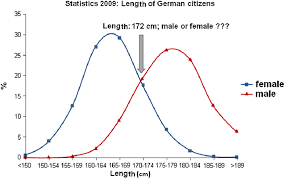
    A bi-modal distribution is a statistical distribution that has two peaks in its frequency distribution curve, indicating that there are two distinct groups or subpopulations within the data set. These peaks can be roughly equal in size, or one peak may be larger than the other. In either case, the bi-modal distribution is a useful tool for identifying and analyzing patterns in data. 

    One example of a bi-modal distribution can be found in the distribution of heights among adult humans. The first peak in the distribution corresponds to the average height of adult women, which is around 5 feet 4 inches (162.6 cm). The second peak corresponds to the average height of adult men, which is around 5 feet 10 inches (177.8 cm). The two peaks in this distribution are clearly distinct, indicating that there are two distinct groups of people with different average heights. 

    To illustrate this bi-modal distribution, we can plot a frequency distribution histogram of heights of adult humans. The histogram would have two distinct peaks, one corresponding to the heights of women and the other corresponding to the heights of men. The histogram would also show that there is very little overlap between these two groups, indicating that they are largely distinct. 

    One of the main reasons why bi-modal distributions are important is that they can provide insights into the underlying structure of a data set. For example, in the case of the distribution of heights among adult humans, the bi-modal distribution indicates that there are two distinct groups with different average heights. This could be useful for a range of applications, from designing clothing to developing medical treatments. 

    Another example of a bi-modal distribution can be found in the distribution of income among households in the United States. The first peak in this distribution corresponds to households with low to moderate income, while the second peak corresponds to households with high income. This bi-modal distribution has been studied extensively by economists and policy makers, as it has important implications for issues such as income inequality and economic growth. 

    In conclusion, bi-modal distributions are a useful tool for identifying and analyzing patterns in data. They can provide insights into the underlying structure of a data set, and can be useful for a range of applications. The distribution of heights among adult humans and the distribution of income among households in the United States are two examples of bi-modal distributions that have important implications for a range of fields. A better understanding of bi-modal distributions can help us make better decisions and develop more effective solutions to complex problems. 

  • Podcast Sampling (Chapter 10)

    An Overview of Sampling

    Chapter 10 of the textbook, “Introduction to Statistics in Psychology,” focuses on the key concepts of samples and populations and their role in inferential statistics, which allows researchers to generalize findings from a smaller subset of data to the entire population of interest.

    • Population: The entire set of scores on a particular variable. It’s important to note that in statistics, the term “population” refers specifically to scores, not individuals or entities.
    • Sample: A smaller set of scores selected from the entire population. Samples are used in research due to the practical constraints of studying entire populations, which can be time-consuming and costly.

    Random Samples and Their Characteristics

    The chapter emphasizes the importance of random samples, where each score in the population has an equal chance of being selected. This systematic approach ensures that the sample is representative of the population, reducing bias and increasing the reliability of generalizations.

    Various methods can be used to draw random samples, including using random number generators, tables, or even drawing slips of paper from a hat . The key is to ensure that every score has an equal opportunity to be included.

    The chapter explores the characteristics of random samples, highlighting the tendency of sample means to approximate the population mean, especially with larger sample sizes. Tables 10.2 and 10.3 in the source illustrate this concept, demonstrating how the spread of sample means decreases and clusters closer to the population mean as the sample size increases.

    Standard Error and Confidence Intervals

    The chapter introduces standard error, a measure of the variability of sample means drawn from a population. Standard error is essentially the standard deviation of the sample means, reflecting the average deviation of sample means from the population mean.

    • Standard error is inversely proportional to the sample size. Larger samples tend to have smaller standard errors, indicating more precise estimates of the population mean.

    The concept of confidence intervals is also explained. A confidence interval represents a range within which the true population parameter is likely to lie, based on the sample data. The most commonly used confidence level is 95%, meaning that there is a 95% probability that the true population parameter falls within the calculated interval .

    • Confidence intervals provide a way to quantify the uncertainty associated with inferring population characteristics from sample data. A wider confidence interval indicates greater uncertainty, while a narrower interval suggests a more precise estimate.

    Key Points from Chapter 10

    • Understanding the distinction between samples and populations is crucial for applying inferential statistics.
    • Random samples are essential for drawing valid generalizations from research findings.
    • Standard error and confidence intervals provide measures of the variability and uncertainty associated with sample-based estimates of population parameters.

    The chapter concludes by reminding readers that the concepts discussed serve as a foundation for understanding and applying inferential statistics in later chapters, paving the way for more complex statistical tests like t-tests .

  • Quantitative Research

    Quantitative research is a type of research that deals with collecting, analyzing, and interpreting numerical data. It is a systematic and objective approach to study a research problem by using statistical and mathematical methods. Quantitative research aims to provide answers to research problems through empirical investigation and analysis of data. 


    Essentials of quantitative research include: 

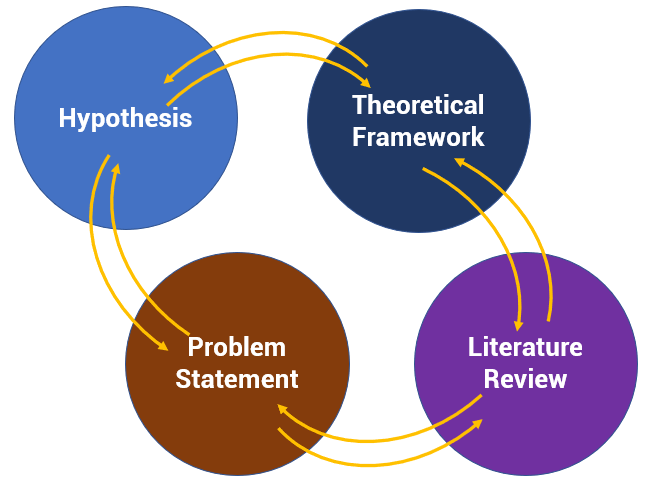
    1. Research problem: The first step in conducting quantitative research is to identify a research problem. This involves understanding the problem that needs to be addressed and why it is important to study it. The research problem should be clearly defined, feasible to study, and relevant to the field of study. 
    1. Research objective: Once the research problem has been identified, the next step is to establish the research objectives. Research objectives are specific and measurable goals that the research aims to achieve. They outline what the research hopes to accomplish and what questions it aims to answer. 
    1. Research goal: The research goal is a more general and broader statement of what the research hopes to achieve. It outlines the overall purpose of the research and the expected outcome. 
    1. Research questions: The research questions are specific questions that the research aims to answer. They help to clarify the research objectives and provide a roadmap for conducting the research. 
    1. Hypothesis: A hypothesis is a statement that predicts the relationship between two or more variables. In quantitative research, hypotheses are used to test the validity of the research questions and objectives. The hypothesis provides a framework for collecting and analyzing data to determine if the research objectives have been met. 

    In conclusion, quantitative research is a systematic and objective approach to the study of research problems. The essentials of quantitative research include identifying a research problem, establishing research objectives, defining the research goal, formulating research questions, and developing a hypothesis. By following these steps, quantitative researchers can ensure that their research is well-structured and that they have a clear understanding of what they hope to achieve.