• Theories, Models and Concepts

    Theories, Models, and Concepts in Media and Marketing

    In the realm of media and marketing, understanding theories, models, and concepts is crucial for developing effective strategies. These constructs provide a framework for analyzing consumer behavior, crafting strategies, and implementing marketing campaigns. This essay will explore each construct with examples to illustrate their application.

    Theories

    Definition: Theories in marketing and media are systematic explanations of phenomena that predict how certain variables interact. They help marketers understand consumer behavior and the effectiveness of different strategies.

    Example: Maslow’s Hierarchy of Needs

    • Theory: Maslow’s Hierarchy of Needs is a psychological theory that suggests human actions are motivated by a progression of needs, from basic physiological requirements to self-actualization[3].
    • Model: In marketing, this theory is modeled by identifying which level of need a product or service satisfies. For example, a luxury car brand might focus on self-esteem needs by promoting exclusivity and status.
    • Concept: The concept derived from this model is “status marketing,” where products are marketed as symbols of success and achievement to appeal to consumers seeking self-esteem fulfillment.

    Models

    Definition: Models are simplified representations of reality that help marketers visualize complex processes and make predictions. They often serve as tools for strategic planning.

    Example: AIDA Model

    • Theory: The AIDA model is based on the theory that consumers go through four stages before making a purchase: Attention, Interest, Desire, and Action[2].
    • Model: This model guides marketers in structuring their advertising campaigns to first capture attention with striking visuals or headlines, then build interest with engaging content, create desire by highlighting benefits, and finally prompt action with clear calls to action.
    • Concept: The concept here is “customer journey mapping,” where marketers design each stage of interaction to lead the consumer smoothly from awareness to purchase.

    Concepts

    Definition: Concepts are ideas or mental constructs that arise from theories and models. They provide actionable insights or strategies for marketers.

    Example: Content Marketing

    • Theory: Content marketing is grounded in the theory that providing valuable content builds brand awareness and trust among consumers[2].
    • Model: A content marketing model involves creating a mix of informative blogs, engaging videos, and interactive social media posts to attract and retain an audience.
    • Concept: The concept derived from this model is “brand storytelling,” where brands use narratives to connect emotionally with their audience, fostering loyalty and engagement.

    In the realm of media and marketing, understanding theories, models, and concepts is crucial for developing effective strategies. These constructs provide a framework for analyzing consumer behavior, crafting strategies, and implementing marketing campaigns. This essay will explore each construct with examples to illustrate their application.

  • Result Presentation (Chapter E1-E3)

    Chapter E1-E3 Matthews and Ross

    Presenting research results effectively is crucial for communicating findings, influencing decision-making, and advancing knowledge across various domains. The approach to presenting these results can vary significantly depending on the setting, audience, and purpose. This essay will explore the nuances of presenting research results in different contexts, including presentations, articles, dissertations, and business reports.

    Presentations

    Research presentations are dynamic and interactive ways to share findings with an audience. They come in various formats, each suited to different contexts and objectives.

    Oral Presentations

    Oral presentations are common in academic conferences, seminars, and professional meetings. These typically involve a speaker delivering their findings to an audience, often supported by visual aids such as slides. The key to an effective oral presentation is clarity, conciseness, and engagement[1].

    When preparing an oral presentation:

    1. Structure your content logically, starting with an introduction that outlines your research question and its significance.
    2. Present your methodology and findings clearly, using visuals to illustrate complex data.
    3. Conclude with a summary of key points and implications of your research.
    4. Prepare for a Q&A session, anticipating potential questions from the audience.

    Poster Presentations

    Poster presentations are popular at academic conferences, allowing researchers to present their work visually and engage in one-on-one discussions with interested attendees. A well-designed poster should be visually appealing and convey the essence of the research at a glance[1].

    Tips for effective poster presentations:

    • Use a clear, logical layout with distinct sections (introduction, methods, results, conclusions).
    • Incorporate eye-catching visuals such as graphs, charts, and images.
    • Keep text concise and use bullet points where appropriate.
    • Be prepared to give a brief oral summary to viewers.

    Online/Webinar Presentations

    With the rise of remote work and virtual conferences, online presentations have become increasingly common. These presentations require additional considerations:

    • Ensure your audio and video quality are optimal.
    • Use engaging visuals to maintain audience attention.
    • Incorporate interactive elements like polls or Q&A sessions to boost engagement.
    • Practice your delivery to account for the lack of in-person cues.

    Articles

    Research articles are the backbone of academic publishing, providing a detailed account of research methodologies, findings, and implications. They typically follow a structured format:

    1. Abstract: A concise summary of the research.
    2. Introduction: Background information and research objectives.
    3. Methodology: Detailed description of research methods.
    4. Results: Presentation of findings, often including statistical analyses.
    5. Discussion: Interpretation of results and their implications.
    6. Conclusion: Summary of key findings and future research directions.

    When writing a research article:

    • Adhere to the specific guidelines of the target journal.
    • Use clear, precise language and avoid jargon where possible.
    • Support your claims with evidence and proper citations.
    • Use tables and figures to present complex data effectively.

    Dissertations

    A dissertation is an extensive research document typically required for doctoral degrees. It presents original research and demonstrates the author’s expertise in their field. Dissertations are comprehensive and follow a structured format:

    1. Abstract
    2. Introduction
    3. Literature Review
    4. Methodology
    5. Results
    6. Discussion
    7. Conclusion
    8. References
    9. Appendices

    Key considerations for writing a dissertation:

    • Develop a clear research question or hypothesis.
    • Conduct a thorough literature review to contextualize your research.
    • Provide a detailed account of your methodology to ensure replicability.
    • Present your results comprehensively, using appropriate statistical analyses.
    • Discuss the implications of your findings in the context of existing literature.
    • Acknowledge limitations and suggest directions for future research.

    Business Reports

    Business reports present research findings in a format tailored to organizational decision-makers. They focus on practical implications and actionable insights. A typical business report structure includes:

    1. Executive Summary
    2. Introduction
    3. Methodology
    4. Findings
    5. Conclusions and Recommendations
    6. Appendices

    When preparing a business report:

    • Begin with a concise executive summary highlighting key findings and recommendations.
    • Use clear, jargon-free language accessible to non-expert readers.
    • Incorporate visuals such as charts, graphs, and infographics to illustrate key points.
    • Focus on the practical implications of your findings for the organization.
    • Provide clear, actionable recommendations based on your research.
  • Focus Groups (Chapter C5)

    Chapter D6 Mathews and Ross

    Focus groups are a valuable qualitative research method that can provide rich insights into people’s thoughts, feelings, and experiences on a particular topic. As a university student, conducting focus groups can be an excellent way to gather data for research projects or to gain a deeper understanding of student perspectives on various issues.

    Planning and Preparation

    Defining Objectives

    Before conducting a focus group, it’s crucial to clearly define your research objectives. Ask yourself:

    • What specific information do you want to gather?
    • How will this data contribute to your research or project goals?
    • Are focus groups the most appropriate method for obtaining this information?

    Having well-defined objectives will guide your question development and ensure that the focus group yields relevant and useful data[4].

    Participant Selection

    Carefully consider who should participate in your focus group. For student-focused research, you may want to target specific groups such as:

    • Students from a particular major or year of study
    • Those involved in certain campus activities or programs
    • Students with specific experiences (e.g., study abroad participants)

    Aim for 6-10 participants per group to encourage dynamic discussion while still allowing everyone to contribute[3].

    Logistics and Scheduling

    When organizing focus groups with university students, consider the following:

    • Schedule sessions during convenient times, such as weekday evenings or around meal times
    • Avoid weekends or busy periods during the academic calendar
    • Choose a comfortable, easily accessible location on campus
    • Provide incentives such as food, gift cards, or extra credit (if approved by your institution)[4]

    Conducting the Focus Group

    Setting the Stage

    Begin your focus group by:

    1. Welcoming participants and explaining the purpose of the session
    2. Obtaining informed consent, emphasizing voluntary participation and confidentiality
    3. Establishing ground rules for respectful discussion[3]

    Facilitation Techniques

    As a student facilitator, consider these strategies:

    • Use open-ended questions to encourage detailed responses
    • Employ probing techniques to delve deeper into participants’ thoughts
    • Ensure all participants have an opportunity to speak
    • Remain neutral and avoid leading questions or expressing personal opinions
    • Use active listening skills and paraphrase responses to confirm understanding[3][4]

    Data Collection

    To capture the rich data from your focus group:

    • Take detailed notes or consider audio recording the session (with participants’ permission)
    • Pay attention to non-verbal cues and group dynamics
    • Use a co-facilitator to assist with note-taking and managing the session[3]

    Analysis and Reporting

    After conducting your focus group:

    1. Transcribe the session if it was recorded
    2. Review notes and transcripts to identify key themes and patterns
    3. Organize findings according to your research objectives
    4. Consider using qualitative data analysis software for more complex projects
    5. Prepare a report summarizing your findings and their implications

    Challenges and Considerations

    As a student researcher, be aware of potential challenges:

    • Peer pressure influencing responses
    • Maintaining participant engagement throughout the session
    • Managing dominant personalities within the group
    • Ensuring confidentiality, especially when discussing sensitive topics
    • Balancing your role as a peer and a researcher[4]

    Conclusion

    Conducting focus groups as a university student can be a rewarding and insightful experience. By carefully planning, skillfully facilitating, and thoughtfully analyzing the data, you can gather valuable information to support your research objectives. Remember that practice and reflection will help you improve your focus group facilitation skills over time.

  • Thematic Analysis (Chapter D4)

    Chapter D4, Matthews and Ross

    Here is a guide on how to conduct a thematic analysis:

    What is Thematic Analysis?

    Thematic analysis is a qualitative research method used to identify, analyze, and report patterns or themes within data. It allows you to systematically examine a set of texts, such as interview transcripts, and extract meaningful themes that address your research question.

    Steps for Conducting a Thematic Analysis

    1. Familiarize yourself with the data

    Immerse yourself in the data by reading and re-reading the texts. Take initial notes on potential themes or patterns you notice.

    2. Generate initial codes

    Go through the data and code interesting features in a systematic way. Codes identify a feature of the data that appears interesting to the analyst. Some examples of codes could be:

    • “Feelings of anxiety”
    • “Financial stress”
    • “Family support”

    3. Search for themes

    Sort the different codes into potential themes. Look for broader patterns across the codes and group related codes together. At this stage, you may have a collection of candidate themes and sub-themes.

    4. Review themes

    Refine your candidate themes. Some themes may collapse into each other, while others may need to be broken down into separate themes. Check if the themes work in relation to the coded extracts and the entire data set.

    5. Define and name themes

    Identify the essence of what each theme is about and determine what aspect of the data each theme captures. Come up with clear definitions and names for each theme.

    6. Produce the report

    Select vivid, compelling extract examples, relate back to the research question and literature, and produce a scholarly report of the analysis.

    Tips for Effective Thematic Analysis

    • Be thorough and systematic in working through the entire data set
    • Ensure your themes are distinct but related
    • Use quotes from the data to support your themes
    • Look for both similarities and differences across the data set
    • Consider how themes relate to each other
    • Avoid simply paraphrasing the content – interpret the data

    Example

    Let’s say you were analyzing interview data about people’s experiences with online dating. Some potential themes that could emerge:

    • Feelings of anxiety and vulnerability
    • Importance of authenticity
    • Challenges of self-presentation
    • Impact on self-esteem
    • Changing nature of relationships

    For each theme, you would provide supporting quotes from the interviews and explain how they illustrate that theme.

    By following these steps and tips, you can conduct a rigorous thematic analysis that provides meaningful insights into your data. The key is to be systematic, thorough, and reflective throughout the process.

  • Developing a Hypothesis

    A hypothesis is a statement that predicts the relationship between two or more variables. It is a crucial step in the scientific process, as it sets the direction for further investigation and helps researchers to determine whether their assumptions and predictions are supported by evidence. In this blog post, we will discuss the steps involved in developing a hypothesis and provide tips for making your hypothesis as effective as possible.

    Step 1: Identify a Research Problem

    The first step in developing a hypothesis is to identify a research problem. This can be done by reviewing the literature in your field, consulting with experts, or simply observing a phenomenon that you find interesting. Once you have identified a problem, you should clearly define the question you want to answer and determine the variables that may be relevant to the problem.

    Step 2: Conduct a Literature Review

    Once you have defined your research problem, the next step is to conduct a literature review. This will help you to understand what is already known about the topic, identify gaps in the literature, and determine what has been done and what still needs to be done. During this step, you should also identify any potential biases, limitations, or gaps in the existing research, as this will help you to refine your hypothesis and avoid making the same mistakes as previous researchers.

    Step 3: Formulate a Hypothesis

    With a clear understanding of the research problem and existing literature, you can now formulate a hypothesis. A well-written hypothesis should be clear, concise, and specific, and should specify the variables that you expect to be related. For example, if you are studying the relationship between exercise and weight loss, your hypothesis might be: “Regular exercise will lead to significant weight loss.”

    • The null hypothesis and the alternative hypothesis are two types of hypotheses that are used in statistical testing.

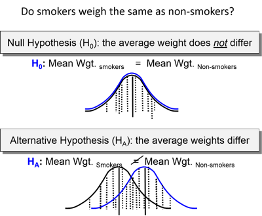
    The null hypothesis (H0) is a statement that predicts that there is no significant relationship between the variables being studied. In other words, the null hypothesis assumes that any observed relationship between the variables is due to chance or random error. The null hypothesis is the default position and is assumed to be true unless evidence is found to reject it.

    • The alternative hypothesis (H1), on the other hand, is a statement that predicts that there is a significant relationship between the variables being studied. The alternative hypothesis is what the researcher is trying to prove, and is the opposite of the null hypothesis. In statistical testing, the goal is to determine whether there is sufficient evidence to reject the null hypothesis in favor of the alternative hypothesis.

    When conducting statistical tests, researchers typically set a significance level, which is the probability of rejecting the null hypothesis when it is actually true. The most commonly used significance level is 0.05, which means that there is a 5% chance of rejecting the null hypothesis when it is actually true.

    It is important to note that the null hypothesis and alternative hypothesis should be complementary and exhaustive, meaning that they should cover all possible outcomes of the study and that only one of the hypotheses can be true. The results of the statistical test will either support the null hypothesis or provide evidence to reject it in favor of the alternative hypothesis.

    Step 4: Refine and Test Your Hypothesis

    Once you have formulated a hypothesis, you should refine it based on your literature review and any additional information you have gathered. This may involve making changes to the variables you are studying, adjusting the methods you will use to test your hypothesis, or modifying your hypothesis to better reflect your research question.

    Once your hypothesis is refined, you can then test it using a variety of methods, such as surveys, experiments, or observational studies. The results of your study should provide evidence to support or reject your hypothesis, and will inform the next steps in your research process.

    Tips for Developing Effective Hypotheses:

    1. Be Specific: Your hypothesis should clearly state the relationship between the variables you are studying, and should avoid using vague or imprecise language.
    2. Be Realistic: Your hypothesis should be based on existing knowledge and should be feasible to test.
    3. Avoid Confirmation Bias: Be open to the possibility that your hypothesis may be wrong, and avoid assuming that your results will support your hypothesis before you have collected and analyzed the data.
    4. Consider Alternative Hypotheses: Be sure to consider alternative explanations for the relationship between the variables you are studying, and be prepared to revise your hypothesis if your results suggest a different relationship.

    Developing a hypothesis is a critical step in the scientific process and is essential for conducting rigorous and reliable research. By following the steps outlined above, and by keeping these tips in mind, you can develop an effective and well-supported hypothesis that will guide your research and lead to new insights and discoveries